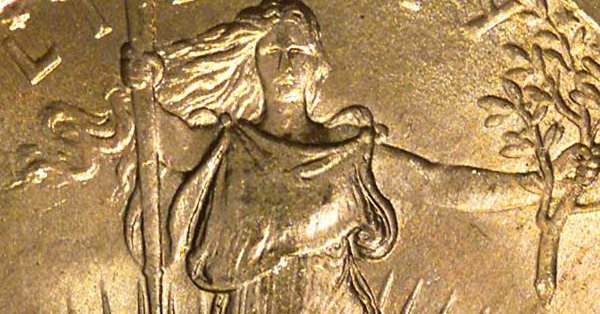
Interest Rates vs. Gold, Stocks and Real Estate
Email This Post
If we look at history we can draw some interesting conclusions from interest rate cycles and how they affect the gold, stock and real estate markets. Typically when interest rates are on the rise gold tends to rise with it and vice versa. Typically when rates are falling stocks and real estate rise and vice versa.
For example, interest rates rose from 1.75% in 1965 to a peak of 15% in 1980. During that same time frame gold went from $35 per ounce to a peak of $850 per ounce. That is a 2,300% increase. During that same time frame the DJIA was stagnant, from 856 in 1965 to 857 in 1982.
From there rates fell from 15% to where they are today at 0-.25%, which created an historic bull market in stocks, with the DJIA at 857 in 1982 to 11,722 in 2000. The historically low interest rate environment started in 2002 just after 9/11 and continued to fuel the stock market up to 14,100 in 2007. During this historically low interest rate environment the real estate market boom ensued. This created a huge bubble which has long since burst and is continuing to do so. The reasons why low rates create stock and real estate market booms is due to increased liquidity. In addition more real estate can be purchased with lower rates, and stocks increase with investment capital inflows when not competing with higher rates on other investments. While interest rates were falling so was the price of gold, which went from $850 in 1980 to $252 in 1999.
So what does all of this mean to gold prices in the future? Well if history repeats itself and gold rises during times of rising interest rates, then one must ask themselves only one question: are rates going higher in the future? I believe rates will have to come off of their historic lows; in fact they only have one way to go since they are at 0% right now. When the economy does start to recover the Fed will have to raise rates in order to slow the flood of cheap money in order to battle inflation.
Why has gold risen during this low interest rate environment? This is due to short-term world economic problems, with people and institutions seeking safe haven from the dollar and other fiat currencies. Thus the demand has increased while supplies are diminishing and worldwide output is slowing down. People worldwide are buying gold bullion and rare gold coins for preservation of capital and growth.
Rob McEwen comes out with his Projections on the Gold Market
Email This Post
Rob McEwen, Chairman and CEO of U.S. Gold and founder and former CEO of Gold Corp the second largest gold producer in the world was interviewed by Bloomberg on January 12th 2009. He has been on the record since March of 2006 saying that gold will reach $2,000 per ounce by the end of 2010. He also states that he believes that gold will hit $5,000 per ounce somewhere between 2012 and 2015.
He sites as his reason for this rapid run up in the price of gold will be due to the governments around the world printing money at a high rate. Mr. McEwen thought that the bull market would have ended by now, but people are starting to see gold as money, a currency that trumps all others. This new demand has fueled the fire further than he thought it would. He is so strong on gold rising that he advises that gold mining companies do not hedge.
In my opinion, Rob McEwen could be right. Gold is in a bull market, and typically bull markets end with a blow-off top in the third phase. We have not seen that third phase yet, so we could see very sharp and dramatic price increases during that time frame. It is undeniable at this point that the U.S. Government is printing money at an alarming rate. Some experts speculate that they have doubled the money supply in under a year’s time. Anytime money printing is done in this fashion it puts extreme pressure on inflation which in turn puts upward pressure on gold. Look at what gold did in the 1970’s, when inflation was running high, gold grew from $35 per ounce to $850 per ounce.
All assets run in cycles so we very well could see gold hit $2,000 per ounce this year. I think it will depend on how the economy performs this year and how much confidence is instilled in the American people. Many have said that the hole has been dug and that the dollar will ultimately collapse like all other fiat paper currencies have. If that is the case gold could go much higher than even $5,000 per ounce. But let’s hope that doesn’t happen, because if it does we are in a lot more trouble than any of us want to be.
Gold ETF’s
Email This Post
A gold ETF is an exchange-traded fund that tracks the price of gold. Gold ETF’s can be found on major stock indexes. One example is SPDR gold trust with the ticker symbol GLD; it is traded on the NYSE. The intention of these funds is to allow investors to invest in the price action of gold. Many of these ETF’s are not backed by gold, or are backed by only a very small amount of gold. The intention here is to speculate on the value of the spot price only. ETF’s will not give you the same protections that owning physical gold will.
How safe is it to own gold ETF’s in today’s economic climate? There are a few items to consider. Bear in mind ETF shares are not actually backed 100% by physical gold, but a combination of gold and a mechanism of derivatives. The actual amount of physical gold an ETF holds is rarely disclosed and covertly disguised in a labyrinth of accounting figures. Try asking a stockbroker what percentage of the ETF is physical gold, and furthermore if you wanted your gold, would you ever get it?
There is also counterparty risk involved in owning gold ETF’s. For example, in September 2008, shareholders in ETF Securities backed by AIG were unable to trade popular commodity securities, due to concerns over the future of their backer AIG. Banks and brokerages actually stopped making markets in the Exchange Traded Commodities (ETCs) backed by AIG, and sold by ETF Securities (ETFS). Consequently the price of the stocks also plummeted over 50% due to the concerns for AIG’s future.
Also remember the physical bullion used to back whatever portion of an ETF is confiscatable by the government. The U. S Government did in fact confiscate gold in 1933 due to extraordinary economic conditions. Should the current economic crisis reach that point again and the government again confiscates gold, the wealth insurance you need most will be taken away.Gold ETF’s can be more expensive to hold than physical gold. With physical gold there is a one-time fee. As opposed to ETF’s where there are many fees starting with one-time fees to buy and sell and annual fees like management expenses, insurance expenses, regulatory fees, exchange fees, accounting expenses, marketing expenses, legal expenses and storage expenses.
Gold ETF’s will give you exposure to the price action of gold, which is great for speculation purposes. What it can’t give you is the safety and security of owning the physical metal itself. Keep in mind physical gold will still give you access to price action.
Those people who decide to buy and own physical gold, their stored value remains more stable than those who own ETF’s. As the value of the dollar decreases, it takes more dollars to buy an ounce of real gold. The “share price” of actual solid gold does not deteriorate as a result of any financial meltdown. Indeed the value of these gold holdings is very likely to go up, and the gold price will continue to increase with the addition of more people seeing it as a safe haven in these stressful times.
Here are some examples of Gold ETF’s traded today:
Ultra Gold ProShares UGL
E-TRACS UBS Bloomberg CMCI Gold ETN UBG
PowerShares Global Gold & Prec Metals PSAU
iShares COMEX Gold Trust IAU
ELEMENTS MLCX Gold TR ETN GOE
UltraShort Gold ProShares GLL
SPDR Gold Shares GLD
Market Vectors Gold Miners ETF GDX
Market Vectors Junior Gold Miners ETF (GDXJ)
5 Reasons why Gold is a Good Investment Today
Email This Post
1. Hedge against inflation
2. Hedge against a collapse of the U.S. Dollar
3. Bull Market
4. Diversification
5. Store of Value
Probably the number one reason why people are investing in gold today is due to a fear of inflation. Central Banks around the world have turned on the money spigots and began flooding banking markets around the world with liquidity. This has scared many people and rightfully so. Once all of this liquidity hits the hands of the people we are in for a serious bought of inflation, maybe even hyperinflation. I have read some statistics that have said that the Federal Reserve (which by the way is a private bank) had doubled the money supply in a year’s time. It will be difficult for the Fed to draw back in all of that liquidity. Although they want you to believe it will be easy for them. When inflation hits gold prices will continue to rise.
Some people are even more concerned that the U.S. dollar will not only hyper inflate, but that it will eventually collapse and become worthless paper. We have seen this happen many times throughout history, the most recent being Zimbabwe. Their currency was declared dead in April of 2009. Citizens of Zimbabwe began digging and panning for gold in order to scrape together enough grams of gold to be able to provide for their families. Gold goes a long way under these circumstances.
On a more positive note, gold can be played purely as speculation that the price will rise. We are in the middle of the 10th consecutive year of price appreciation. This is a strong bull market for gold, and many experts are calling for gold to reach $2,000 to $5,000 per ounce before the cycle ends. Therefore, putting money into gold now, if the experts are right, can be very lucrative.
Gold is always, first and foremost a portfolio diversifier. Gold typically performs better when stock, bonds, dollars and other paper assets do poorly. However there are times when gold does well in conjunction with paper assets, but typically gold and other precious metals will compliment your paper assets nicely, giving you appropriate diversification.
Gold has always been a store of value. For over 5,000 years gold has been coveted and treasured. Gold will never be worthless, while any paper asset can be rendered worthless under a variety of circumstances. Now gold can definitely decline in value but it will always be worth something. Governments and countries can collapse and companies can go bankrupt which would then render those respective paper assets worthless. Gold has no debt or any other encumbrance or decision maker attached to it other than you.
These times are proving to be the perfect time to own gold.
Is there a Current Floor to the Gold Price?
Email This Post
Gold has been of value for over 5,000 years. Civilizations have risen and fallen, currencies have come and gone and yet gold still is coveted by people all around the world. Gold has never been worthless! It has always had some value to it; therefore it is different than most other asset classes. Stocks, bonds and paper currencies for example can all become worthless at some point.
But is there a floor under the price of gold? The simple answer is no. I am assuming that this question is pertaining to the government. Neither the U.S. Government, nor any other government has a floor price on gold. A floor price being the minimum a person or institution has to charge for it, or the lowest possible dollar amount it can fall to. Gold can free float as high or as low as the market’s action will allow. So the price is determined primarily by supply and demand. But there are technical tools that can help us understand the price action of gold.
This leads me to believe the question is this: what is the current support level on the price of gold? Most assets trade between support on the bottom and resistance on the top. These two figures are determined by previous market action. When an asset breaks a resistance level, that figure then becomes the new support level. The current support level on gold is $1,017 which was the last resistance level. The resistance level at the top is $1,218. Gold has not tested that level since it was set in December of 2009. In addition, recently gold has had difficulty breaking $1,045 on the bottom (the price at which India bought 200 metric tonnes from the IMF) and the $1,120 mark on the top. So I am calling $1,045 to $1,120 a smaller trading range within the technical trading range.
Should gold go below $1,045, look for it to test the $1,017 level. If gold breaks the $1,120 level on the top look for it to test the $1,218 mark. If gold should break the $1,218 level that would then be the new support level with the new resistance level being unknown because it has never been higher. If gold should break the $1,017 support level that would then become the new resistance level and the next support level would be around $1,000.
Technical language can be confusing, so if I have done so I apologize. In the simplest form, the current support level is $1,017 and the current resistance level is $1,218.
Gold Price Gains and Losses over the Last 3 Months
Email This Post
The price action on gold has been hot lately. Gold closed at an all-time high on December 2nd of $1,212.50 per ounce. The price action prior to that was climbing almost daily from the $1,050 mark. After it reached the high of $1,212.50 it slowly made its way down to test the $1,050 support level. It came close to this support level but never broke it. It closed at around $1,058 on February 5th and since then has steadily climbed to where it sits today of $1,112.
The up and down market action can be scary for your average investor. This is why I always say, if you are not a day trader then you do not need to pay attention to the daily market action. What you are looking for are trends in the market. Trends are what tell you what to do in the long-term. Trends should guide your strategy. If you look at a chart of gold from 2000 to present you can see a long-term positive trend. It started at $252 per ounce and has been climbing ever since. Sure there have been some big corrections along the way, buy that is what you want. Ups and downs are a sign of a healthy market. If you were watching the daily market action you might have sold out too early. This is why trends are so important.
Take March of 2008 to November of 2008 for example. Gold rose to an all-time high of over $1,000 per ounce and steadily fell to $709 per ounce. Had you have sold out because of the downward slide, you would have missed out on the following upswing. As for the current trend, everything is pointing towards a continuation of the upward trend. Two of the biggest factors playing into the future of the gold market are the U.S. Dollar and normal bull market cycles.
The dollar has been in a steady demise for a few years now, and with all of the money printing going on with the U.S. government I don’t think it will be going strong anytime soon. I have written many times in this blog about the three phases of a bull market which I think is also a big factor contributing to the positive trend in gold. Many experts are calling for gold to hit $2,000 per ounce this year and $4,000 to $5,000 per ounce before the trend is over.
When to Buy $20 Liberties and $20 Saint Gaudens?
Email This Post
The old adage says that timing is everything. Or that one should always buy low and sell high. With rarer issues of $20 Liberties and $20 Saint Gaudens, timing isn’t necessarily everything. Now, you can always buy rare gold coins in the dips in the market which will always produce better results over the long-term, but rare gold coins have proven over time to have performed very well, consistently. It should be noted that if you picked up some of these coins in 1989, which was the peak of the last bull market you would not have recovered yet. But if you look at a chart of mint state rare gold coins from 1970 to present, you can see that if you bought at any other time you would be doing fairly well.
Incidentally, we are currently experiencing what I believe to be a temporary low in these coins, which I presume will be a great buying opportunity. But where we are in the trend cycle I feel that we have many years to go before this market tops out.
Because of the high gold content of these coins, each Liberty and Saint-Gaudens Double Eagle contains .9675 ounces of gold, they will never be worth zero. Gold has never been worthless. This gives their owners an added layer of protection.
In addition, these types of coins are scarce. For example, millions of 1 ounce American Eagle coins are minted each year. Whereas PCGS and NGC estimate that somewhere around 1.5 million 1 ounce Liberties and Saints in a 62 to 66 grade exist today. This adds yet another layer of protection for their owners.
These coins have been excluded from gold confiscation in the past, and with the dollars extreme weakness, it is thought by many that another gold confiscation is looming. Many experts believe that the numismatics will again be excluded from confiscation if it were to occur. This is another layer of protection.
Due to these factors I believe that anytime is the right time to buy Liberties and Saints. They have proven time and time again, that they are a safe and private way to accumulate wealth over time.
Gold, Long-Term Hold
Email This Post
When investing in gold you will often hear it called a long-term investment. What exactly does long-term mean? You will typically hear precious metals companies refer to a long-term hold as a period from 3-5 years up to 10 years or possibly more. Where did this come from? It was illegal in the U.S. to own gold from 1933 to 1974, and prior to that gold was pegged to the dollar for 100’s of years. So owning gold bullion as an investment is a fairly new thing. Its track record is currently at 36 years. When compared to other investments that is a fairly short time frame.
If you are reading this blog for the first time then we must pause and differentiate between the two types of gold you can own, bullion and numismatic gold. These two types of gold have different strategies for ownership behind them and different spreads (see previous blog post). These factors will determine length of hold. For more on the different types you can read bullion and rare gold coins.
My thoughts on long-term hold and where it came from is this. When the dollar was removed from the gold standard in 1970 the price action was allowed to free float. The price of gold rose from $35 per ounce to $850 per ounce in January of 1980. That was a fast and significant rise in the value. From there gold fell to its low of $252 per ounce in 1999, with ups and downs all along the way. That was a fairly slow and significant fall. Because gold as an investment is a fairly new opportunity companies want to disclose to their clients that it may take a while to grow your gold’s value. Gold’s recent climb from $252 per ounce in 1999 to $1,115 where it stands today has been a fairly steady rising pace. So if you bought bullion in 1999 you would have realized over a 340% gain.
There are times when it has taken a few years to see your gold grow and there have been times when it would have taken many years to see your gold grow. This is why everyone needs to DIVERSIFY their portfolios.
When comparing the two different types of gold, bullion and numismatics, these tend to perform differently. If you look at a PCGS chart you can clearly see that over the past 40 years numismatics have outperformed gold bullion. This is due to a few factors that make it unique, but mainly it is rarity. Because the cost of doing business is higher, it will take you longer to make up the difference, which is another factor in “long-term.” It should be noted that bullion and numismatics do not move in lock step with each other. In fact from 1987 to 1989, bullion lost roughly 10% of its value while numismatic coins according to PCGS went up over 600%.
The net of this is that sometimes it can take a short period of time to cover your costs of doing business, and other times it can take years. That is why it is noted by companies to think long-term when it comes to gold ownership, because no body really knows. In addition, many people choose gold to protect against a collapsing dollar, and in that case it could be a very long hold.
What does it Cost to buy Gold
Email This Post
Buying gold coins should be a process of discovery; for you and for you representative. You will begin to discover the ins and outs of owning gold in your portfolio and what it can do for you. On the other side your broker should discover what your goals and objectives are. Items like: are you more concerned with asset protection or growth, are you long-term or short-term, what are your concerns about the future, how much of your overall portfolio do you want in gold, as well as other questions that may arise.
These questions will help you both narrow down to the right type of gold and or silver that is right for you. Once you have a strategy in place it is easy to begin to acquire the appropriate precious metals for you. This can take place in one lump some or your strategy could include a plan to acquire pieces over time.
There are various costs of doing business in each category of gold and silver. Bullion gold or silver, meaning loose coins and bars of a more recent issue, typically can range anywhere between 2-10% on average throughout the industry. This is what is known as the spread. The spread is the difference between retail and wholesale. Typically you will buy at retail and sell at wholesale. Common dated numismatic gold coins with typically rage anywhere between 15-25% and better dated or rare gold coins will typically range between 25-35%. These are averages; some can be higher or lower depending on the company. Make sure to choose a company that discloses their spread verbally and in writing and that it is clear exactly what their spread is (not a range).
Do not be afraid of high spreads! You want to use the right tool for the right job. That might mean owning rare gold coins which fetch a higher premium. This type of gold has outperformed gold bullion in the mint state rare category (according to PCGS) close to 4-1 over the past 40 years, and has some other very important benefits that other types of gold do not have. This type is a typically a longer term hold. For these reasons it is important to understand your options and your goals, in order to apply the right tool for the right job.
Gold as a Store of Value
Email This Post
Gold has been around for over 5,000 years. It has been treasured by individuals, kings and civilizations for its beauty and intrinsic value. It has been used for trade and as a currency for many years throughout history by many different countries. Gold has always been used in jewelry and for artistic purposes. But the main point is, it has always been a store of value and always will be.
Gold’s value comes from its rarity. Anything that is sought after that is rare is valuable. In fact, some estimate the world pours more steel in an hour than it has poured gold since time began. All the gold in the world could be compressed into a 20-yard cube, which is about 1/9th the mass of the Washington Monument.
This financial storm has created a lot of demand for gold, just like many other financial crises have. As demand heats up the values rise. This is a simple rule of economics. However, because gold is of limited supply, its values will rise faster than that of something that can be massed produced. It should be noted that more gold is added to the market every year through mining, but peak gold production has been achieved. A mining company used to be able to extract 12 grams of gold from 1 ton of ore. Now the average is 3 grams per ton of ore.
People always wonder if gold will ever be worthless. It has never been worthless, and I do not believe it ever will be. It is the first true money. It cannot be printed into oblivion and it cannot be destroyed. Thousands of currencies have failed over history, but gold has stood the test of time. It is truly the choice for a store of value.


Recent Comments